

In 1831, a young French aristocrat named Alexis de Tocqueville sailed to America, ostensibly to study our prison system. He ended up producing one of the most penetrating analyses of American democracy ever written—a document so perceptive that we still cite it nearly two centuries later, largely because an outsider could see things about us that we had long since stopped seeing about ourselves.
We have never really stopped needing that service.
G.K. Chesterton crossed the Atlantic and wrote “What I Saw in America.” Sacha Baron Cohen sent Borat careening through the heartland, holding a funhouse mirror up to our culture that was, depending on your tolerance for discomfort, either hilarious, devastating, or both.
It is no coincidence that we have always turned to the British to be rude to us on television— Simon Cowell telling us our singing is dreadful, Chef Robert Irvine telling us our kitchens are a biohazard, that lady telling us we are the weakest link. We instinctively understand that foreigners carry an expertise about us that we have forfeited through sheer familiarity. You cannot see your own face without a mirror, and we have always imported ours.
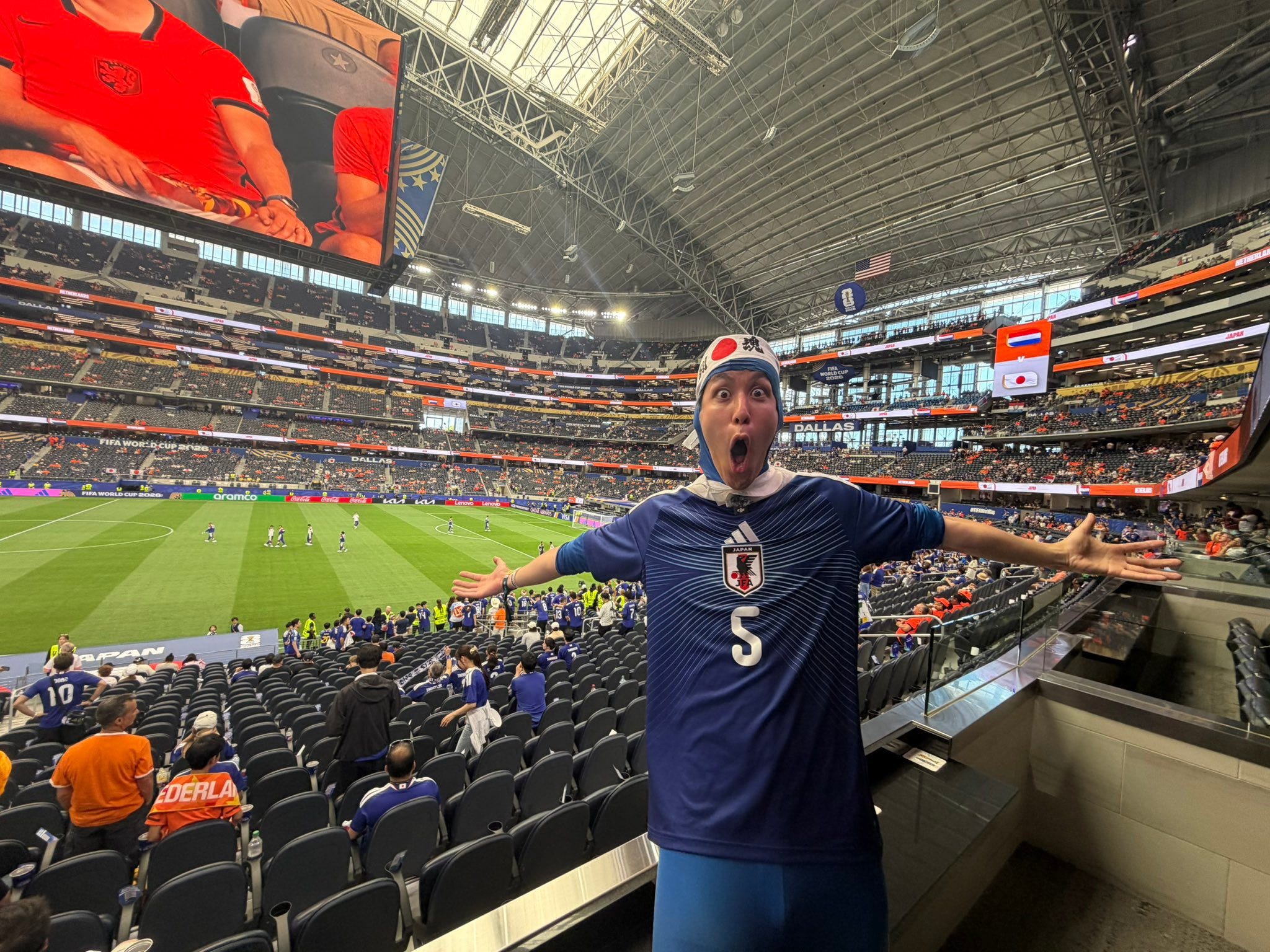
But now the mirrors have come to us. As the World Cup has descended on American soil, something unexpected has happened alongside the soccer. Citizens of the world—wide-eyed Europeans, Asians, South Americans, Africans—have poured into our cities and our small towns, and they have reacted to the country we have grown accustomed to with something that looks an awful lot like wonder. Social media is full of foreign fans calling it the world’s sleepover, and the thing they keep marveling at is us. Our Walmarts. Our ranch dressing. Our Grand Canyon. Our portions, our friendliness, our staggering, almost embarrassing abundance.
It is, if you let it in, a genuinely moving thing to watch.
Louis C.K.—before his particular story took its well-documented turn—had a bit about how everything is amazing and nobody is happy. He talked about sitting in a plane at thirty thousand feet, accessing the internet at impossible speeds, and hearing a passenger complain because the connection was slow. We have been that passenger for decades. America has become so immersive, so constant, so much the water we swim in, that we have simply stopped noticing it. The wealth, the freedom, the sheer logistical miracle of a country this size functioning at all—we have metabolized all of it into background noise.
And then someone from the Netherlands sees a Walmart or a Buc-ees for the first time and loses his mind over the cereal aisle, and suddenly you remember that the cereal aisle is, objectively, insane, in the best possible way.
After drowning in several hours of videos of foreign fans celebrating the U.S., I took a walk in my neighborhood and started noticing new things about the streets of my hometown. I began trying to see things with new eyes - what would someone from The Congo, for instance, think about the sandwich shop I visit every week? Would they think the thing I take for granted was a capitalist miracle?
But the more important revelation—the one that cuts deeper than ranch dressing—is this: the foreigners are not just discovering America. They are discovering Americans. And that distinction matters enormously right now.
There is a version of this country that exists on cable news, in congressional chambers and in the fever swamps of social media, where every interaction is adversarial, and every neighbor is a potential enemy, and the whole enterprise feels like it is held together with duct tape and grievance. That version of America is real, in the way that a fever is real— it reflects something happening in the body, but it is not the body itself.
Watch what happens when thousands of fans from Algeria—a Muslim-majority country—descend on Lawrence, Kansas, a city of 100,000 people in the middle of the Great Plains, and the locals welcome them. Not grudgingly. Not with suspicion. With the particular warmth that small-town America has always been better at than it gets credit for. It is the kind of moment that does not generate much punditry because it does not confirm anyone’s preferred narrative about who we are. It just quietly happens, and it is beautiful.
The same scene played out in Boston, where it seemed the entire nation of Scotland arrived at once, kilts and bagpipes and all, and was absorbed into the city with the kind of effortless hospitality that Americans perform so naturally they do not even notice they are performing it. That instinct—to welcome, to feed people, to show them around, to make them feel at home— is not something we invented last week. It is constitutional, in the older sense of the word.
Don’t take my word for it, take the word of this Scottish woman who has been moved to tears by her American adventure.

 Tiktok failed to load.
Enable 3rd party cookies or use another browser
I wrote a few years ago about a small Wisconsin town that opened its arms to Afghan refugees after the Biden administration’s chaotic withdrawal from Kabul. The same impulse was at work there: ordinary Americans, not directed by any government program or national movement, simply deciding that the right thing to do was to help. The ruling class did not engineer that generosity. It preceded them and will outlast them.
That is, perhaps, the most clarifying thing about this particular moment. While the current administration rules by crassness and fear—and while our political class more broadly seems engaged in a permanent competition to demonstrate how small and mean it can become—the regular Americans keep being regular Americans. Kind. Helpful. Curious about strangers. Proud of what they have built without ever quite saying so out loud.
America is not its politicians. The foreigners visiting us this summer seem to understand that intuitively, the way outsiders so often understand things about us that we are too close to see.
As the country prepares to mark its 250th anniversary, we will hear a great deal from officials and commentators about the state of the republic—most of it, if recent history is any guide, designed to provoke rather than illuminate. Pay less attention to them. Watch the Brits downing Texas barbecue. Watch Lawrence, Kansas open its doors. Watch Boston hand a Scotsman a beer and learn to pronounce his town’s name wrong in a way that he finds charming anyway.
It turns out the world’s sleepover is also a tutorial. And for the first time in a long time, we are the ones being reminded why we love this place.

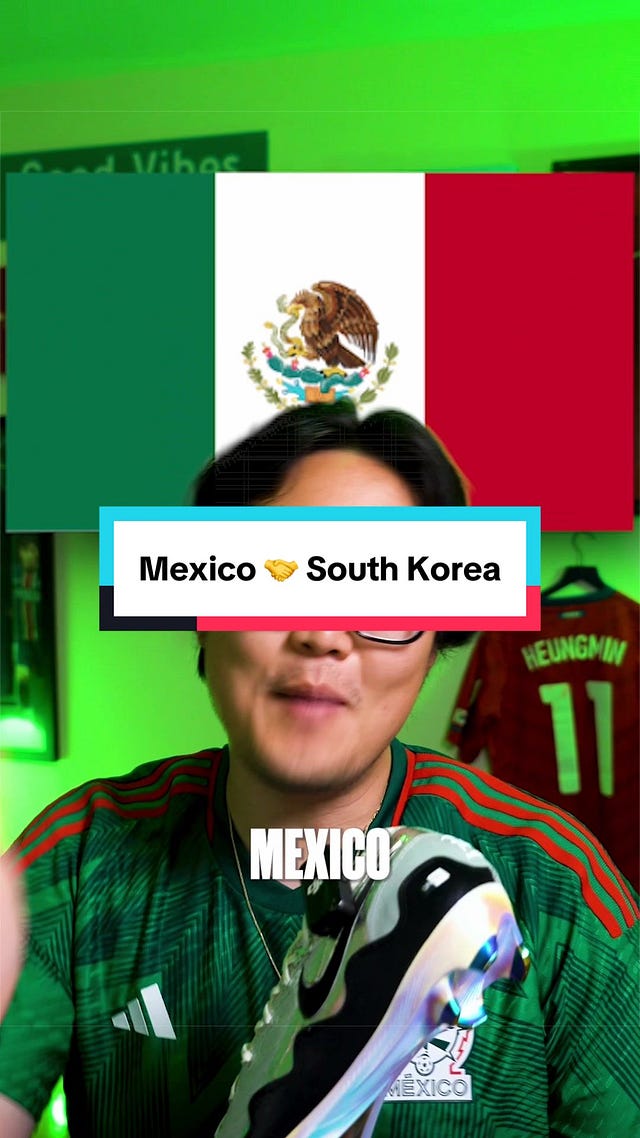
It’s not just in America—when the South Koreans hit the ground in Mexico, the love-fest began. So cleansing for the soul.
 Tiktok failed to load.
Enable 3rd party cookies or use another browser