

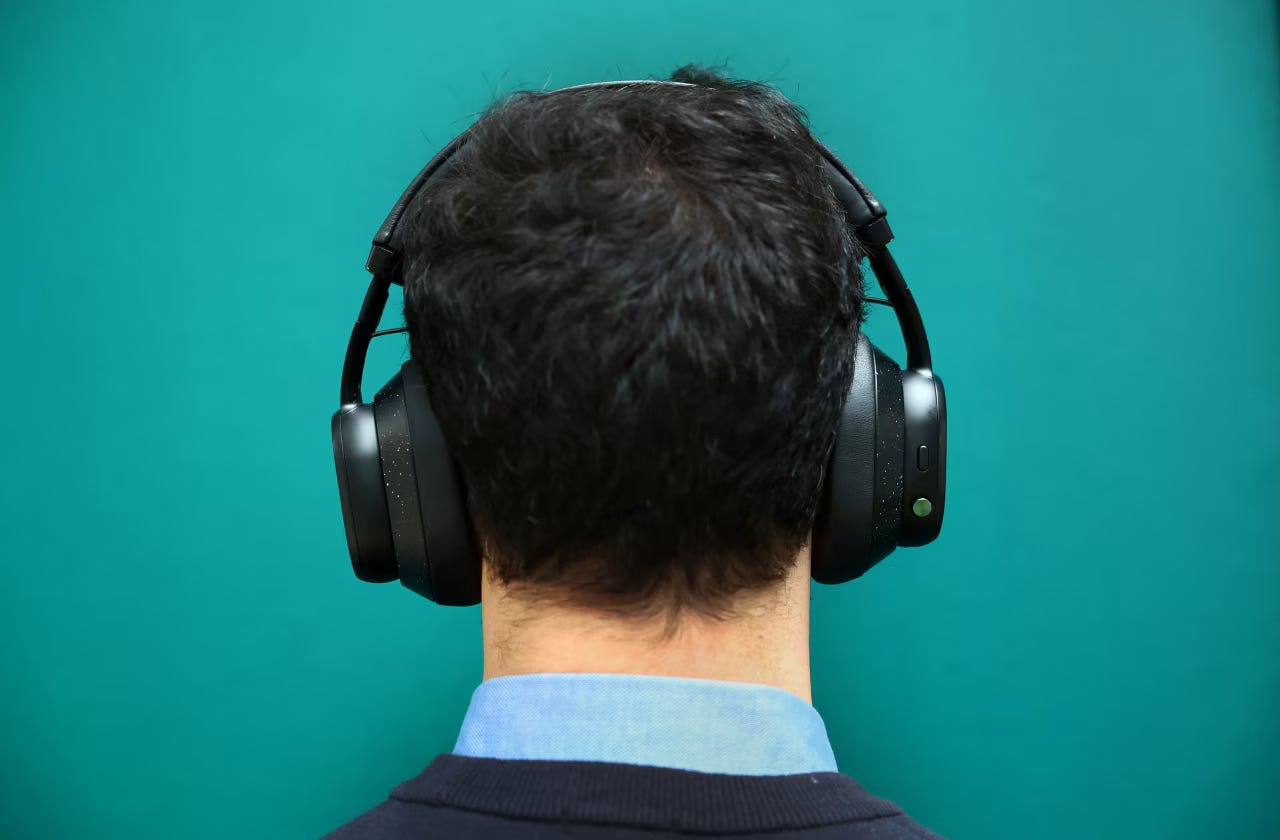
As soon as my iPhone upgraded to its new operating system, iOS 26, my Apple Watch began alerting me of its displeasure with my life choices.
A couple of times a day, I would get a red alarm warning me that the music I was listening to was too loud and that it would eventually cause long-term hearing damage. Apparently, this feature had been available on iOS devices since 2020, and remained dormant on my devices until now.
The joke is on Apple, because I have always listened to loud music. As a result, I now have to listen to even louder music to make up for my decades of slow hearing loss. You’re too late, ghost of Steve Jobs! Go haunt younger ears!
Why don’t my “smart” watch and phone want me to rock out?
It bothers me. When I signed up for a life tethered to technology, I presumed it was going to make things easier. Superintelligence would streamline my everyday tasks and help me keep in touch with people.
More often, our technology serves to nag us, as if we need a pocket parent scolding us for our poor choices.
My iPhone once got the idea that I wanted to be notified during the day that I wasn’t moving enough. Given my typical Sunday afternoon football-watching habits, I worried my phone might call 911, thinking I was dead.
Friends have told me their phones will alert them when they are in an environment—concert, air show—that is too loud. One gets a buzzing notification from his watch when he gets into the shower.
Another told me she bought her daughter a water bottle that also came with a phone app meant to alert her when she wasn’t drinking enough H2O. Fortunately, humans are born with a built-in app in our brains that tells us, “Hmmm, I’m thirsty.”
It’s impossible to escape the cloud, whether it’s logging your health data or your purchasing habits.
Every food app keeps data on your restaurant trips. Occasionally I get an email from billionaire restaurateur Bartholomew Q. Chipotle reminding me that it’s been a while since I ordered one of his burritos. I imagine he owns a mansion outside of town that sits atop a mountain of rice.
Everything is backward—instead of you watching your TV, your TV is watching you. It is only a matter of time before some streaming algorithm butts in and says, “I see you are about to watch your sixth straight hour of ‘Love is Blind.’ Are you sure you don’t want to watch something a little more intellectually nutritious?”
The answer, by the way, is always “no.” Dating shows teach you far more about modern society than a Ken Burns documentary ever could.
Even social applications contribute. They prod me to respond to messages promptly, condemn my social media inactivity and encourage me to exercise digital social stamina. One day, I ignored a friend’s text for three hours, and I swear my phone muttered a digital sigh, the vibration almost heavy with disappointment.
I imagine the engineers’ memos: User engagement is down; consider adding gentle guilt notifications. What once were simple tools for connection have become managers, life coaches and petty supervisors wrapped in silicon and glass.
Our learned obeisance to the algorithm is the strangest part. We accept this micro-surveillance as a form of care, like someone tapping us on the shoulder, whispering: “We just want the best for you.”
But the line between care and coercion blurs when every mundane act—breathing, standing, drinking coffee, listening to music—is tracked and corrected. Technology has become a moralizing entity, telling us that our personal quirks and indulgences are infractions to be corrected.
I long for the days when I could sing off-key in the shower without fear of a device admonishing me for decibels, or fire down a churro without a smartwatch looking down its long, pointy nose of disapproval over my sugar intake.
Yet here we are, wedded to these little nags, caught in a feedback loop where our rebellion is measured, quantified and catalogued. And while I grip the steering wheel, stereo blaring just loud enough to hurt my eardrums, I can’t help but think: Maybe Steve Jobs never intended this.
Maybe this is a perverse, inevitable evolution of convenience technology—a reminder that when you invite the machine into your life, it doesn’t just help you. It judges you.
This article originally appeared in The Wall Street Journal.