

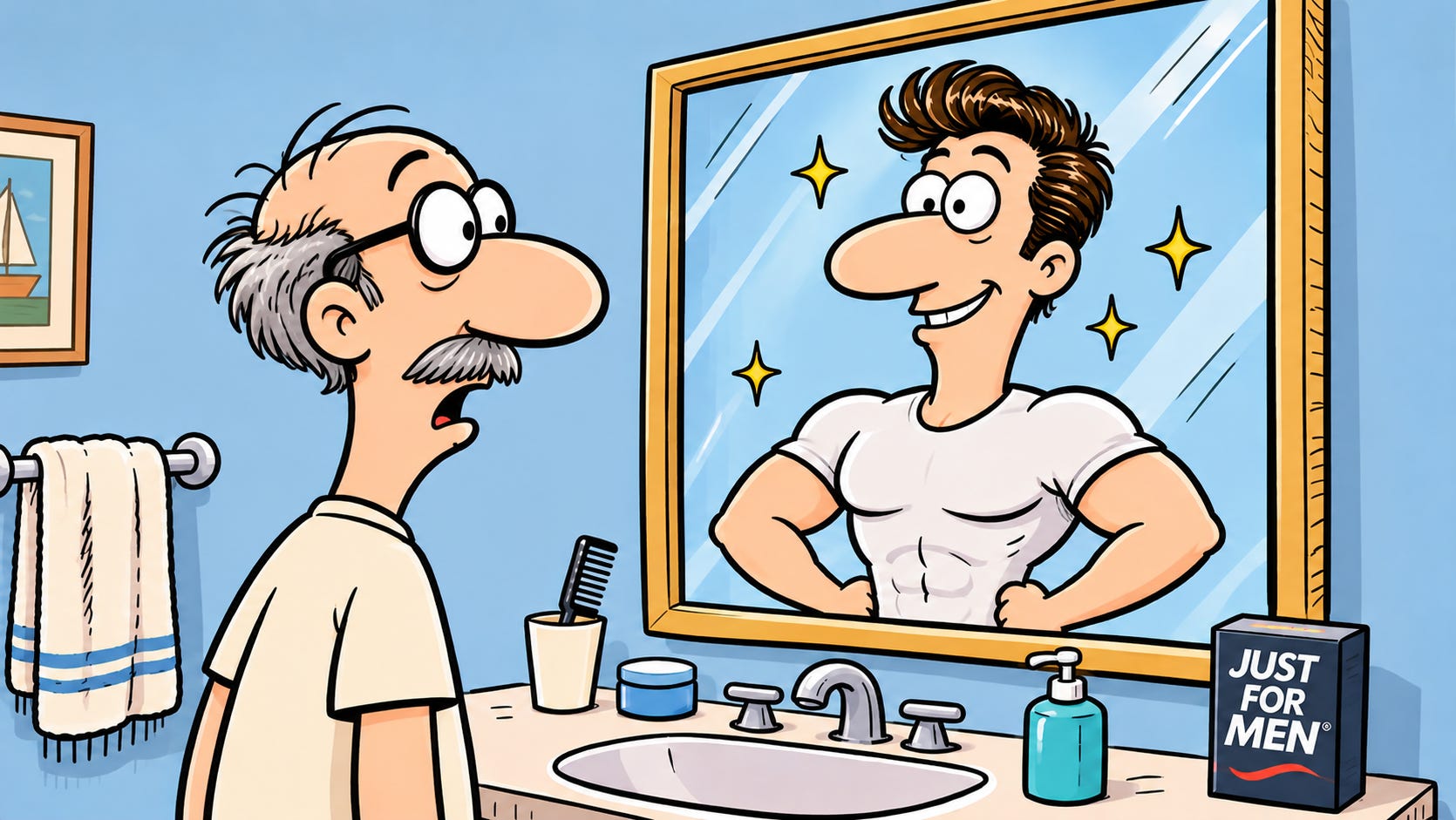
As generations pass by, certain style fads come and go. Bell-bottoms give way to polyester suits, which give way to giant flannel grunge shirts, and so on.
One style that has quietly gone extinct in recent years is the combover. For the youngs reading this, for much of recent history, bald men would effectively grow hair very long on one side of their head, then swirl that hair on top of their head to make it appear their youth was still intact. Instead, it appeared as if an old man had combed hair across his head with a pork chop.
Men never had any reason to do this. Some polls (including this one by an “infidelity website”) show that women are actually more attracted to bald men. Even if you don’t regularly karate-chop bad guys like Jason Statham, rocking a bald dome signals maturity, intelligence, honesty, education, and self-confidence.
Full disclosure: Even in my 50s, I still have my hair, which has saved me a lot of money, as I have never been forced to buy a sports car. But I never understood why bald men have gone to such lengths to cover up their perceived follicular shortcomings. Bald is, indeed, beautiful.
Yet entire industries have been built on helping men avoid the horrors of seeing the top of their head. NBA players have been caught spraying paint on the top of their heads, leaving black skids on the jerseys of opponents they bump into. Celebrities who were once thin up top come back from trips to Turkey looking like James Brown. Hats and sunglasses perched atop the head are supposed to draw the eye away from cranial shine.
At some point, men determine that even though this hirsute chicanery is obvious, it is preferable to the horrors of seeing the tops of their heads. Soon, the shock wears off, and people accept that it is just part of their look. Dad is going to wear a wig now, and that is that. Elton John isn’t fooling anyone, so why would anyone care about your coworker?
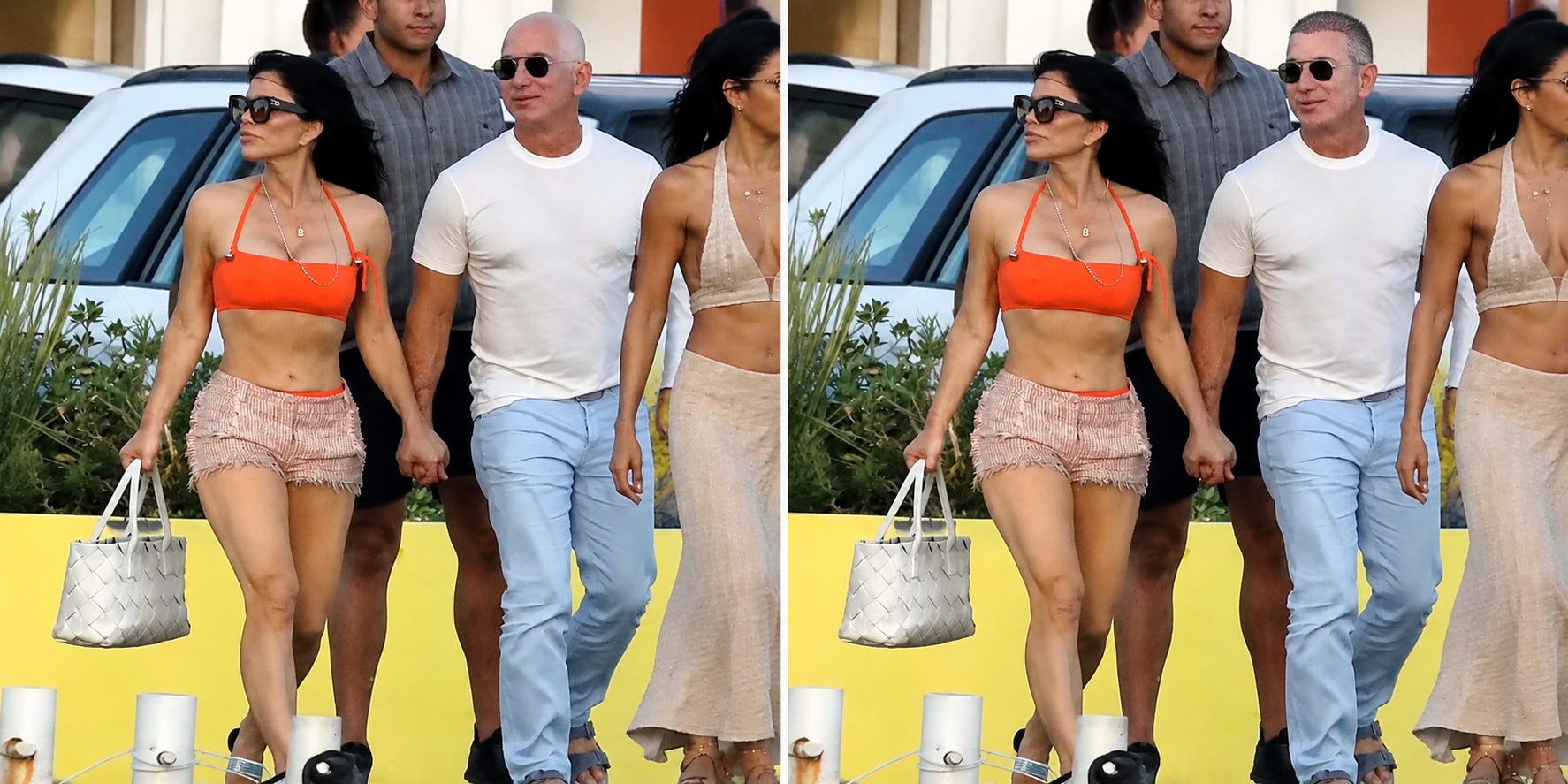
(Just this week, pictures of Amazon founder Jeff Bezos circulated after he allegedly got hair transplant surgery in Turkey — even after they were proven to be AI fakes, progressives continued their ridicule, just feeling the need to get their contempt for Bezos off their chests. But even if he had gotten transplants, so what?)
Nonetheless, as I have aged, I am starting to understand this need for obvious aesthetic reconstruction. As the saying goes, the older you get, the more accepting of others you become because your own flaws become increasingly vivid.
For men, the rebranding often begins by growing a beard. Facial hair is glow-up 101: If men have a weak chin or are developing more wrinkles, just grow a beard and you can determine where your chin starts and your neck ends. Much like makeup allows women to apply the face they wish they had, beards are like facial home renovation.
The problem comes when you’re old enough for your beard to turn gray. Some women say they enjoy a salt-and-pepper beard, but that usually applies to men who are already chiseled and grow some gray facial hair. Most normal men have a binary choice: They can be cleanly shaven and look fat, or they can grow a gray beard and look old.
Or at least I’ve always thought that was the choice. A couple of weeks ago, while standing in the men’s shampoo section of my local grocery store, I noticed that Just For Men had a stick one could use to color his beard. Intrigued, I bought it, brought it home, and applied it as directed.
The results were hilarious. I looked like Hans Gruber from Die Hard. (When the late Alan Rickman actually played the deliciously villainous Gruber, he was 40 — I am 53.)
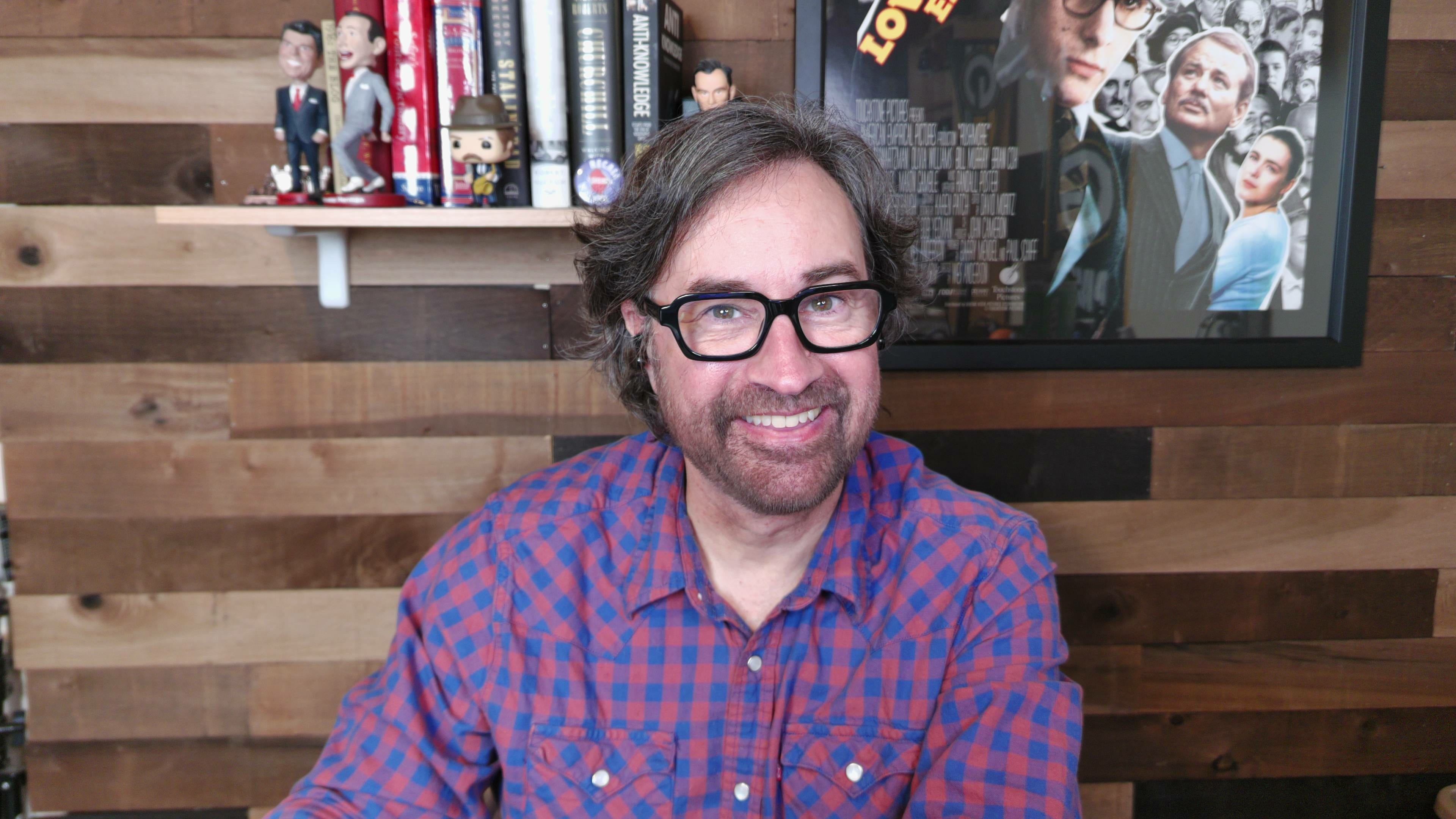
It all washed out after I took my first shower, and that was that. I was back to being the standard, off-the-shelf old-guy-hiding-his-chin-with-gray-stubble guy.
Aside from the fact that I didn’t like the way it looked, I felt like trying to deceive people spoke to my character. So I'd show up on work calls and expect people to believe I had suddenly grown a dark brown beard? It would make me a liar and insult their intelligence. I live in constant fear of being considered inauthentic, and I didn’t want to be accused of running a facial scam on an unsuspecting public.
(In other words, I regard beard coloring in the same way Ron Swanson regards skim milk: “There’s only one thing I hate more than lying: skim milk. Which is water that’s lying about being milk.”)
Before washing the color out of my chin hair, I left the house for a bit, and I couldn’t help but feel everyone was looking at me. This is the opposite of the way I have lived my entire life — my dream is to be invisible, to move amongst the public without anyone ever taking notice of me. No flashy clothes or cool hairstyles; I just want to be an extra in everyone else’s story. So it was disquieting to feel like people were looking at the “new” me.
It goes without saying (although I will say it anyway) that this is the way most women live their lives from birth. They are judged (primarily by other women) on their style — what they wear, how they fashion their hair, how much weight they have gained or lost, and myriad other factors. I couldn’t do it. I would never leave the house. (I still remember my naïveté in high school when I realized some girls actually bleached their hair blonde, a procedure I thought was reserved for famous people. “You mean you color your hair like Madonna?”)
That is why more women are now being open about the improvements they undergo to retain their “youthful” looks. In an interview with The Cut (fittingly) that ran last week, actress Jennifer Lawrence talked at length about all the work she has had done to her face and body, leading my friend Kirsten Fleming at the New York Post to bemoan Hollywood’s “puffed up, plastic clones.” (I have a beloved coworker who sporadically undergoes a procedure that involves drilling holes in her face, which feels like it should be a criminal sentence for pedophiles, not an aesthetic rejuvenation process.)
But now that I am old, I am starting to understand the desire for men to be as attractive as they can for as long as they can hold on. A little bit of vanity isn’t a terrible thing, and even if your aesthetic changes are ridiculous (dude, you’re 64 years old, nobody believes you still have a dark head of hair or are naturally wrinkle-free), go ahead and live your life. And if that life involves accepting the aging process, as basketball star LeBron James has done by finally shaving his head bald, then good for you for being your authentic self.
As for me, though? The public will likely have to suffer through watching me age as a normal person does. In fairness, I have been told that I look younger than I am, an accusation for which I have only one bit of advice: Never, under any circumstances, go outside.
But I am perfectly happy turning into a standard old person, complete with bushy eyebrows and nose hair that appears as if I inhaled a bunny rabbit. I should warn the members of the public: I get fractionally less attractive every day, so I will never look as good as I do today. Soak it in while you can.

For my regular column at National Review this week, I talked about the midterm elections and how Democratic domination represented the return of shame to modern politics. As I note:
Historian Gordon Wood wrote that George Washington “judged all his actions by what people might think of them,” which “sometimes makes him seem silly to modern minds.” The Founders’ “intense self-conscious seriousness” about virtue, he wrote, “is what ultimately separates them from later generations of American leaders.”
Given the drubbing handed to Republicans by voters on Tuesday, it looks like Americans want that separation to be much smaller. They are seeking more serious people who actually believe things, rather than cretins who are immune to public humiliation. It is a shame it hasn’t happened sooner.
I started thinking about the whole idea of shame in politics when I read this piece by New York Times humor critic Jason Zinoman, in which he discusses how busty AI-generated “comedians” are stealing jokes from actual female stand-ups without attribution.
Zinoman writes:
Joke stealing has long been considered a reputation-ruining offense. But unlike humans, A.I. comics can’t be shamed.
You might say that A.I. is just using the same old Hollywood playbook: selling a version of reality with more sex appeal. The difference is that the tech companies have already manipulated the market to give themselves a better chance of success. As traditional networks decline, young comics rely on social media to make a living. It’s where they market their work and make money by going viral — and everyone knows the way to gain followers is through outrage or sex appeal.
Effectively, these AI avatars are robbing real joke writers of their work. It is outright theft that threatens to do real damage to the female comedians who put in the effort to write and perform the bits. But how do you shame a digital comedian who can’t be shamed? And what happens when this lack of shame spills into every other aspect of American society, such as politics? We are quickly finding out.
(Zinoman also recorded a video on the Great Sexy Stand-Up Heist, which can be viewed here.)

My Milwaukee Brewers are world champions. I wrote a piece for MS NOW explaining how this is revolutionary for baseball.
I also was able to go to one of the World Series games in Tampa — the one game the Brewers lost, by blowing a one-run lead in the bottom of the 12th inning. I am evidently the kiss of death.


I am obsessed with the album It Goes On by Manchester, England band Westside Cowboy. Here’s the song “Kick Stones (The Boys)” from a live BBC performance: